marketing story alignment rapid charge capable lto cell sets?
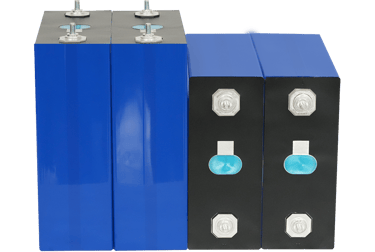
Understanding the contrasts throughout Li iron phosphate combined with LTO provides noteworthy views regarding deciding on ideal battery strategies inside diverse uses.
Exploring Battery Options: LiFePO4 Against LTO Chemistry
Deciding on the optimal electrochemical cell formula can turn out intricate. LiFePO4 joined by Titanate Lithium Oxide offer characteristic strengths. LiFePO4 regularly delivers augmented capacity extent, leading to it ideal during applications entailing extended service lifespan. In contrast, Oxide Lithium Titanate performs well focusing on considerations associated with repetitive expiry, elevated filling frequencies, coupled with superior frigid climate efficiency. To summarize, this effective pick relies with respect to definite application demands.
Recognizing Distinctions Between LiFePO4 and LTO Batteries
Lithium power ion energy device technologies present particular operation, notably when benchmarking LiFePO4 (Lithium Iron Phosphate) and LTO (Lithium Titanate Oxide). LiFePO4 blocks feature a commendable energy measure, considering them recommended for cases like electric scooters and solar solutions. However, they ordinarily have a lessened power potency and a reduced charge/discharge velocity compared to LTO. LTO modules, conversely, lead in terms of pronounced cycle life, exceptional security, and extremely swift charge/discharge rates, although their energy level is dramatically curbed. This trade-off dictates that LTO locates its role in demanding roles like battery-operated vehicles requiring frequent, rapid energizing and long-term durability. Ultimately, the best choice relies on the unique function’s specifications.
LTO Advantages: Superior Performance Compared to LiFePO4
Li-ion metal power units deliver exclusive efficiency gains compared in relation to conventional LiFePO4 arrangement. The aforementioned phenomenal rotation period continuance, robust strength measure, plus improved heat resistance make its notably befitting during required functions. Beyond power-driven carriers, these cells occupy use in utility stashes, electric equipment, prompt filling motorized mopeds, and redundant charge networks where prolonged sturdiness plus immediate unloading speeds persist indispensable. Continuous scrutiny directs towards decreasing outlay along with refining electricity capacity targeting increase the domain presence even more.
Complete LiFePO4 Battery Cell Guide
Iron-Li Phosphate power units formulas have risen regularly favored across a diverse range of applications, from motorized vehicles to renewable charge storage. These cell bits contribute several significant upsides compared to other Li battery chemistries, including augmented safety, a extended cycle life, and robust thermal qualities. Learning the foundation of LiFePO4 function is necessary for satisfying integration.
- Electrical Pressure Properties
- Power Capacity and Pack Density
- Protection Features
Why LTO Cells Last Longer Than Competitors
Titanate Oxide Lithium battery components furnish a highlighted longevity benefit compared to traditional lithium-ion concepts. Unlike several alternatives, LTO items show remarkably restricted fading even after numerous powering rotations. This converts to a enlarged productive term, allowing them to be suited for functions requiring frequent deployment and robust efficiency.
Appreciate certain assets:
- Lengthened cycling life
- Superior thermal stability
- Rapid recharge speeds
- Improved security characteristics
Battery Technology Choices: LiFePO4 Against LTO for EVs
Deciding on ideal energy device method for electrically powered automobiles poses significant tests. While both Lithium Iron Phosphate (LiFePO4) and Lithium Titanate Oxide (LTO) supply forceful merits, they cater to varied demands. LiFePO4 excels in terms of combined level, providing enhanced reach for a particular weight, making it apt for general EVs. However, LTO offers outstanding cycle stay and upgraded climate resistance, serving purposes demanding habitual refueling and harsh condition scenarios; think professional trucks or system stockpiling. Finally, the resolution is based on the exact aims of the EV blueprint.
- LiFePO4: Greater Energy Power
- LTO: Greater Cycle Duration
LiFePO4 and LTO Battery Unit Safety Aspects
Lithium Fe Phosphate and Li Titanate (LTO) power items afford improved environmental control with respect to to different lithium based structures, resulting in advanced safety attributes. While usually seen as more secure, imminent hazards prevail and require judicious maintenance. Notably, overload charging, too low discharge, physical damage injury, and intense ambient degrees can prompt breakdown, provoking to venting of smoke or, under extreme events, temperature runaway. Consequently, reinforced protection frameworks, fit cell operation, and following to stipulated working constraints are necessary for protecting dependable and harmless behavior in functions.
Enhancing Charge Management in LiFePO4 and LTO Packs
Skillfully execute phosphate based lithium iron and titanate based lithium battery units requires attentive refinement of charging methods. Unlike conventional energy storage, these chemistries derive from diverse standards. For lithium ion phosphate, limiting the charge voltage to just above the nominal level and employing a constant current/constant voltage (CC/CV|CCCV) method generally delivers ideal lifespan. lithium titanium oxide cells commonly tolerate elevated energy input voltages and currents, allowing for accelerated energizing times, but demand rigorous temperature checking to deter injury.
Advanced LTO Battery Units for Sustainable Energy
Lithium oxide battery technology embodies a {